Interview with dr. Jack Abernethy

Graduated in the beginning of July at the University of St Andrews

🎓 PhD Dissertation , titled ‘Scottish military involvement in the Dutch Revolt, c.1572–1609’.

The study argues that between 1570 and 1609, Scotland’s principal military partnership was with the emergent Dutch Republic. It traces the transformation of Scottish participation from individual volunteers into an institutionalised Scots-Dutch Brigade, which endured even into the period of the Twelve Years’ Truce.

Although the full thesis is under embargo until 2029, Jack kindly agreed to answer a set of written questions for the website of the Friends of the Scots Brigade Foundation.

The following interview reflects on his motivations, findings, and the relevance of the Scots Brigade as both a military and diplomatic actor in early modern Europe.

  1. What inspired you to choose the Scottish Brigade as the subject of your PhD research?

During my undergraduate studies at St Andrews, I took Professor Steve Murdoch’s final-year special subject ‘Britain and the Thirty Years’ War, 1618-1648.’ During the first few weeks of the semester, I gave a presentation on Sir Horace Vere of the Anglo-Dutch Brigade and Sir John Seton of the Scots-Dutch Brigade and their deployment into the Palatinate and Bohemia in defence of Elizabeth Stuart, Queen of Bohemia. While reading about Vere’s defense of Mannheim and Seton’s last letter from Trebon I was caught up in the romance and tragedy of the early Thirty Years’ War, and it was from there that my interest in these soldiers grew. After that, I became involved with the Scotland, Scandinavia and Northern Europe Database, updating entries on Scots-Dutch officers and became immersed in the lives of these fascinating individuals.

  1. What do you see as the Brigade’s most significant contribution to Dutch military history?

Throughout the early years of the Dutch Revolt, Scots were one of — if not sometimes the — biggest supporters of the rebels in terms of recruited manpower. It was in the critical years between about 1577 and 1584 when, without the aid of the Scots, the Dutch war effort would have been in dire, maybe even fatal, straits.

  1. How did the political and religious background of the soldiers influence their service?

Religion and politics played an enormous role in the service of these soldiers. At the outset of the Dutch Revolt, when religious lines were less clearly defined it was not unusual to find Catholics in the Brigade. However, as religious identities became more polarized and local politics began to play a larger role, Scottish Catholics began leaving the Brigade — often into Spanish service. By the 1610s and 1620s, the Brigade was staunchly Calvinist and these soldiers were used as the vanguard of Maurice of Nassau’s Protestant aims to quell unrest internally or exercise military power, internationally.

  1. What were the biggest challenges you faced in your research?

One issue that I continue to struggle with are finding more individual documents, letters, or diaries in my period. Most of the sources I engage with are strictly diplomatic or military in content, with only glimmers of personal stories in wills or testaments. When I do find the stories, they are rich but I’m still looking for a Scots-Dutch diary or letter treasure trove — I’m sure they’re out there, I just need to keep looking!

  1. Did you make any surprising discoveries that changed your perspective?

Over the course of my PhD, my focus shifted from the individuals of the Brigade and its day-to-day administration and operations to an analysis of its place within wider Anglo-Scottish, Scots-Dutch, and European diplomacy and politics. One of the more surprising elements was discovering that James VI, King of Scots, played a far greater role in the promotion, deployment, and recruitment of the Brigade than previously acknowledged. This is even more surprising given his reputation as Rex Pacificus — ‘King of Peace’ — but I’m hoping that my PhD and future research nuances this portrayal.

  1. Why is the history of the Scottish Brigade still relevant today?

At the beginning of the Dutch Revolt, around 1568, I’m not sure that anyone envisioned that it would be the start an international war which would result in the creation of an independent state and cause a general European conflict which would last eighty years. Focusing on the Scots-Dutch Brigade and the involvement of Scots in the Dutch Revolt provides a lens with which to view how a regional or local conflict can spiral into an international war on an enormous scale, and how theaters of war which we might consider distinct are, in fact, interconnected.

  1. If you could ask one historical figure from the Brigade a question, who would it be and what would you ask?

I have many! Colonel Sir William Brog had three children who were all illegitimate and legitimized under the Great Seal of Scotland; I would probably ask him who their mother was.

  1. What message would you like to share with descendants of Scottish Brigade soldiers?

Do visit the Scotland, Scandinavia, and Northern Europe Database (SSNE), and if you have any questions or comments about an ancestor please get in touch with me! We would love to hear from you and give credit for any updates or amendments provided.

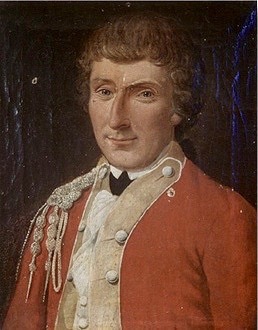
Photo: dr. Jack Abernathy

Winner of the Thesis Award: Jack Abernathy for his research on the Scots Brigade

The Board of the Friends of the Scots Brigade Society is honoured and pleased to announce that Jack Abernathy has been awarded the Thesis Prize of our Foundation for his outstanding research titled: The Bulwark of the Republic? The Scots-Dutch Brigade in the Second Half of the Eighty Years’ War (1609-1648).

Abernathy’s innovative research significantly enhances our understanding of the Scots-Dutch Brigade’s role in Dutch and Scottish political, military, and social affairs using new archival sources. For example, Abernathy raised attention to the Brigade’s crucial contributions to the Dutch war effort, especially during the sieges of Bergen op Zoom and ‘s-Hertogenbosch.

Abernathy, currently a PhD student at the University of St Andrews, is highly deserving of the prize from the Foundation, which consists of an Award Certificate and a monetary amount of €1,000. The Chairman of the Foundation will present the prize to him at a special meeting in Edinburgh.

Rudolf de Blij, Chair, Friends of the Scots Brigade Foundation

Theo Dekker, Secretary, Friends of the Scots Brigade Foundation

Interview with dr. Jochem Miggelbrink*

Serving the Republic: Scottish Soldiers of the United Provinces, 1572-1782

Biography: Jochem Miggelbrink wrote a PhD thesis on the Scots Brigade between 2000-2005. Before his dissertation: Serving the Republic: Scottish Soldiers of the United Provinces, 1572-1782 (2005) Miggelbrink majored in Ancient History at Utrecht University and graduated on Celtic mercenaries with Hellenic political entities. 

Q: What motivated you to write a dissertation on the Scots Brigade?

A: I was very much interested in a PhD abroad. The European University Institute in Fiesole (near Florence) provided the opportunity to conduct comparative research on the early modern period in Europe. After some exchange of ideas with Maarten Prak and Jan Lucassen, a proposal was written, and I was introduced to Laurence Fontaine who became my promotor. 

Q: Why did you study the Scots Brigade?

A: Through my interest in Celtic mercenaries, I noticed that little research had been done on the Scots Brigade since James Ferguson. 

Q: How did you conduct your research?

A: First constructing a research question. However, little research was done on the Scots Brigade. Therefore, visiting archives and collecting (primary) sources was the first step of my research, which also largely determined my methodology. Consequently, I experienced some difficulties since little had been written on the Scots Brigade, however, my research was based on new empirical evidence such as lists of conduct. This resulted in a more cultural perspective on the Scots Brigade. 

Q: Where did you find your sources?

A: Archives in the United Kingdom, The Hague, and the garrison cities. 

Q: How did Scottish soldiers reflect on their identity. Since they were Scottish, but gradually integrated in the Netherlands? In other words, were they more loyal to Scotland or the Republic?

A: This was one of the most interesting aspects of my research. First of all, ‘identity’ is a rather anachronistic term. I doubt the Scots reflected on their identity. However, there were notions of belonging and loyalty. At times these notions of loyalty could be contradictory. For example, during the Anglo Dutch wars they felt a loyalty to their employer, but also to the British crown. During their employment in the army of the Dutch Republic they operated as a distinct separate entity. In the lists of conduct of the officers it showed for instance that a number of Scottish officers spoke Gaelic. This conflict of loyalty culminated at the beginning of the 4thAnglo Dutch war when the Dutch Republic decided to fully integrate the Scots Brigade in the army of the Dutch Republic. For some officers this went too far and even though some of them were 3rd or 4th generation Scots they decided to return home. 

Additional information:

Interview with dr. Jochem Miggelbrink

Interviewers: Rudolf de Blij & Theo Dekker 

Location: Vrije Universiteit (Amsterdam).

*This interview was conducted in Dutch but translated into English to reach a wider audience. 

Interview with dr. Roelof van Gelder – A Scottish Officer in Suriname

Introduction

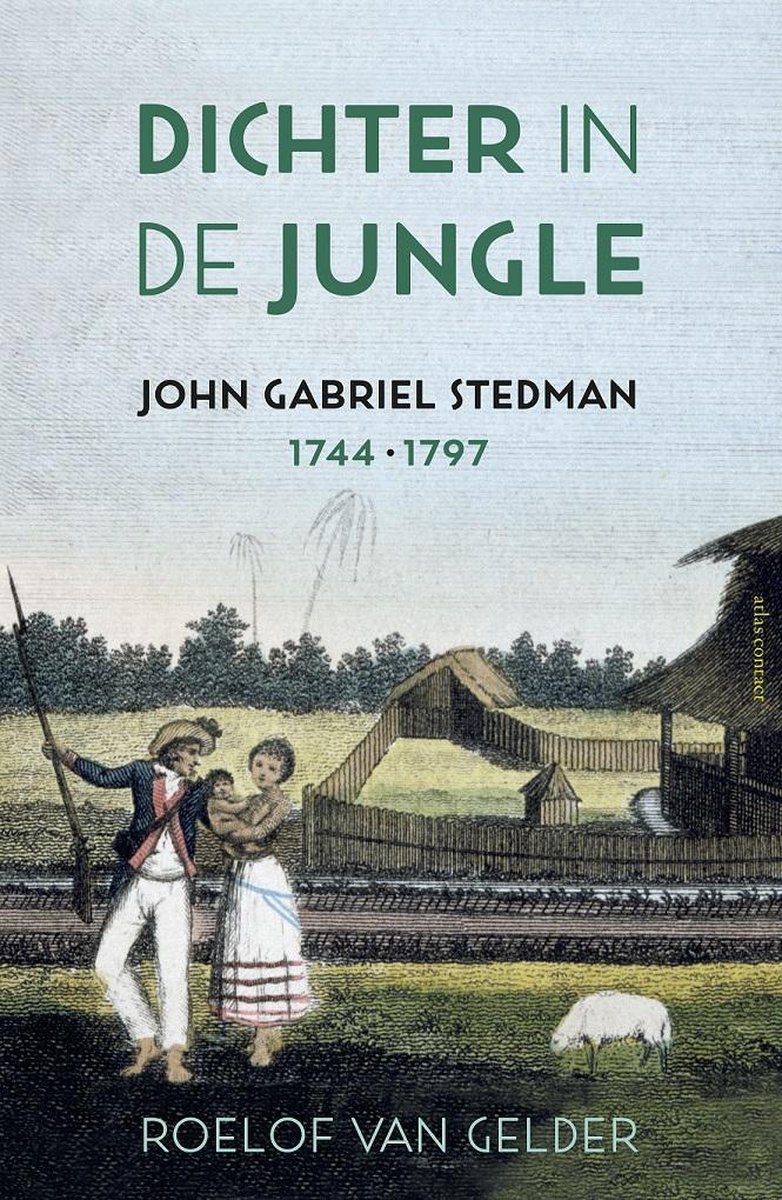
Roelof van Gelder, is a Dutch historian, former editor of NRC Handelsblad and a specialist in the field of Dutch cultural history and maritime history. In 2018 he published: Dichter in the Jungle (A Poet in the Jungle), the biography of the officer in the Scots Brigade John Gabriel Stedman (1742-1797). Stedman is best known for his book: A Narrative of a Five Year’s Expedition against the revoltes negroes of Surinam (London 1796). This book is renowned for its many engravings, partly made by William Blake.

Roelof van Gelder’s book was awarded the Libris History Prize 2018.

Question: What motivated you to write this biography?

Van Gelder: I have always been interested in Dutch overseas history, in the East and West Indies. Ego documents have also always intrigued me, i.e. letters, diaries, memoirs of people from the past. I’ve published a lot about that and that’s how Stedman came into view. In a London antiquarian bookshop I once bought a remarkable book about Stedman from 1962. It described his life fragmentarily on the basis of his diaries, childhood memories and a few letters. This is how my two areas of interest came together. And when I went looking for a real biography of Stedman, it turned out not to exist. Then I thought: I’ll write that myself.

Question: How did you work?

Van Gelder: Stedman’s diaries and also the original manuscript of his famous book A Narrative turned out to be in an American library and to have been digitized. So I was able to get started at home. Further research in the Surinamese archives and in the archives of the cities where he lived added much to this.

Question: What’s new in your book?

Van Gelder: First off, this is the first full biography about Stedman. There was a fictionalized biography and you had the aforementioned antiquarian book. You also had the introduction to the publication of the first draft of Stedman’s book by the anthropologist couple Richard and Sally Price.

Second, my book goes into much more detail on many aspects of Stedman’s life than the above books do, drawing on many more sources. As a result, his childhood years, his life in the Scots Brigade and his attitude towards slavery are better portrayed.

Question: How was that?

Van Gelder: Stedman was exceptional because he had a deep interest in all aspects of Suriname. That is why he wrote about history, geography, flora and fauna and of course about the different population groups, including the slaves. At first he knew nothing about it, but gradually he began to see through that odious system. He knew slaves personally and was friendly with them, also learned their language. He entered into an intimate relationship with a young slave, Joanna, with whom he had a son. I think he disapproved completely of the slavery system, but he couldn’t just write that down. He had become an officer in the British army when he wrote his book. And abolition was then suspicious, revolutionary and anti-government.

Question: How do you judge his life?

Van Gelder: He started his life as an ensign in the Scots Brigade and developed there as a rake, a fighter, an adventurer and a practical joker who was always in trouble with money. In his Surinamese years (1772-1777) he repented and back in the Netherlands he started a more civilized life. He married a Dutch woman and in 1784 he left for England, now in the service of the British army. There he turned out to be a semi-intellectual who incorporated many quotes from famous authors in his book.

Question: Was his life successful?

Van Gelder: Stedman had two great ambitions: he wanted to get a high rank in the British army and become a famous writer. He succeeded in both ambitions, but at the last minute of his life. A year before his death, in 1796, he became a lieutenant colonel and in the same year his book was published. 

My book is a great success in the Netherlands; it was awarded the Libris History Prize 2018. I hope an English publisher is interested in an English edition. After all, Stedman’s life is also English and Scottish history.

Roelof van Gelder: Dichter in de jungle. John Gabriel Stedman (1742-1797) (Amsterdam 2018); 380 pages, illustrated, published by: AtlasContact.

New Research on The Scots Brigade – Jack Abernethy

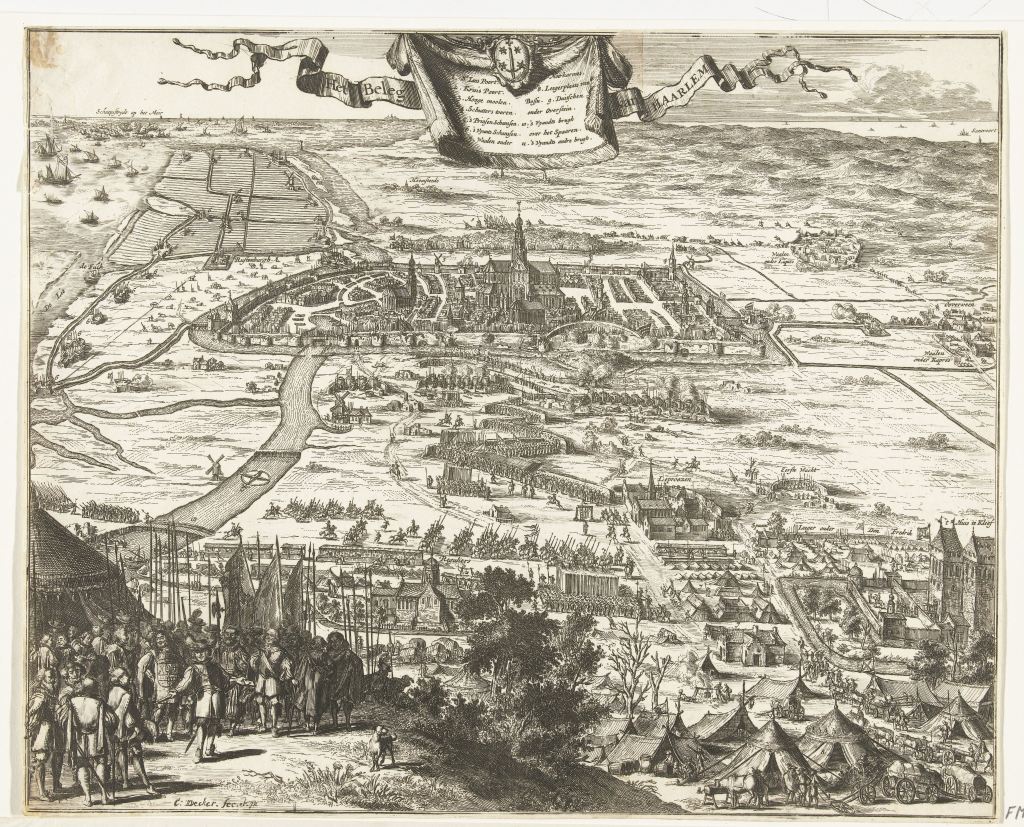
Jack Abernethy is a current PhD candidate at the University of St Andrews, researching the Scots-Dutch Brigade from its origins at the outset of the Dutch Revolt up to the Twelve Years Truce in 1609. Jack’s thesis first analyzes the Brigade’s military contributions to the Dutch war effort, using sieges and battles like Haarlem (1572), Gembloux (1578), Nieuwpoort (1600), and Ostend (1600-1604) as case-studies for its successes and failures. The thesis will also examine the Scottish-Dutch diplomatic and mercantile networks which underpinned the Brigade before exploring the social integration of Scots into the emerging Dutch state. 

Although Jack is only in the second-year of his PhD, he has made serious reappraisals of the role which the Scots-Dutch Brigade had in the early days of the Dutch Revolt. Jack has found that size of the Brigade was far larger than any previous estimates have indicated: in fact, he has already identified more than twenty previously unknown company commanders… and that’s just for the 1570s! Additionally, though some historians have commented that the Brigade and its men were ‘too weak’ to influence events in Holland and Zeeland, Jack has discovered that its officers were at the forefront of fighting and, in some cases, negotiations over the fate of instrumental cities and towns like Haarlem, Ostend, and Bruges. 

Jack envisions his PhD as part of a larger project on Scotland and the Eighty Years’ War. Such a project would cover the full military service of the Brigade up to 1648, as well as examining maritime conflict and migration, diplomacy, and Scots-Dutch networks which stretched beyond the borders of the Dutch Republic. Jack is no stranger to the post-1609 era, having completed a 30,000-word masters’ thesis on the Brigade’s service and social integration between 1609 and 1648. He has also published on the Scots-Dutch Brigade in the journals Arquebusier, Northern Scotland, and Scotia and has two pieces coming out this year in the Oxford DNB and Northern Studies. Last year, Jack was involved in Billy Kay’s radio program, ‘Scotland and the Low Countries,’ which was broadcast on BBC Radio Scotland and has further planned publications for the near future.  In addition to his PhD research, Jack is an editor on Steve Murdoch and Alexia Grosjean’s Scotland, Scandinavia and Northern Europe database (SSNE), a free biographical database which catalogues British and Irish migration to Northern Europe in the Early Modern period. Jack is currently involved in writing biographies for the Scots-Dutch officer corps between c.1570-1707, and has authored or edited over 400 biographies so far. If you are interested in keeping up with Jack’s research or have any questions for him, you can follow him on Twitter (@JackAbernethy) or contact him through the SSNE.

Siege of Haarlem 1572 (Coenraet Decker, 1673 – 1681)