Graduated in the beginning of July at the University of St Andrews
🎓 PhD Dissertation , titled ‘Scottish military involvement in the Dutch Revolt, c.1572–1609’.
The study argues that between 1570 and 1609, Scotland’s principal military partnership was with the emergent Dutch Republic. It traces the transformation of Scottish participation from individual volunteers into an institutionalised Scots-Dutch Brigade, which endured even into the period of the Twelve Years’ Truce.
Although the full thesis is under embargo until 2029, Jack kindly agreed to answer a set of written questions for the website of the Friends of the Scots Brigade Foundation.
The following interview reflects on his motivations, findings, and the relevance of the Scots Brigade as both a military and diplomatic actor in early modern Europe.
- What inspired you to choose the Scottish Brigade as the subject of your PhD research?
During my undergraduate studies at St Andrews, I took Professor Steve Murdoch’s final-year special subject ‘Britain and the Thirty Years’ War, 1618-1648.’ During the first few weeks of the semester, I gave a presentation on Sir Horace Vere of the Anglo-Dutch Brigade and Sir John Seton of the Scots-Dutch Brigade and their deployment into the Palatinate and Bohemia in defence of Elizabeth Stuart, Queen of Bohemia. While reading about Vere’s defense of Mannheim and Seton’s last letter from Trebon I was caught up in the romance and tragedy of the early Thirty Years’ War, and it was from there that my interest in these soldiers grew. After that, I became involved with the Scotland, Scandinavia and Northern Europe Database, updating entries on Scots-Dutch officers and became immersed in the lives of these fascinating individuals.
- What do you see as the Brigade’s most significant contribution to Dutch military history?
Throughout the early years of the Dutch Revolt, Scots were one of — if not sometimes the — biggest supporters of the rebels in terms of recruited manpower. It was in the critical years between about 1577 and 1584 when, without the aid of the Scots, the Dutch war effort would have been in dire, maybe even fatal, straits.
- How did the political and religious background of the soldiers influence their service?
Religion and politics played an enormous role in the service of these soldiers. At the outset of the Dutch Revolt, when religious lines were less clearly defined it was not unusual to find Catholics in the Brigade. However, as religious identities became more polarized and local politics began to play a larger role, Scottish Catholics began leaving the Brigade — often into Spanish service. By the 1610s and 1620s, the Brigade was staunchly Calvinist and these soldiers were used as the vanguard of Maurice of Nassau’s Protestant aims to quell unrest internally or exercise military power, internationally.
- What were the biggest challenges you faced in your research?
One issue that I continue to struggle with are finding more individual documents, letters, or diaries in my period. Most of the sources I engage with are strictly diplomatic or military in content, with only glimmers of personal stories in wills or testaments. When I do find the stories, they are rich but I’m still looking for a Scots-Dutch diary or letter treasure trove — I’m sure they’re out there, I just need to keep looking!
- Did you make any surprising discoveries that changed your perspective?
Over the course of my PhD, my focus shifted from the individuals of the Brigade and its day-to-day administration and operations to an analysis of its place within wider Anglo-Scottish, Scots-Dutch, and European diplomacy and politics. One of the more surprising elements was discovering that James VI, King of Scots, played a far greater role in the promotion, deployment, and recruitment of the Brigade than previously acknowledged. This is even more surprising given his reputation as Rex Pacificus — ‘King of Peace’ — but I’m hoping that my PhD and future research nuances this portrayal.
- Why is the history of the Scottish Brigade still relevant today?
At the beginning of the Dutch Revolt, around 1568, I’m not sure that anyone envisioned that it would be the start an international war which would result in the creation of an independent state and cause a general European conflict which would last eighty years. Focusing on the Scots-Dutch Brigade and the involvement of Scots in the Dutch Revolt provides a lens with which to view how a regional or local conflict can spiral into an international war on an enormous scale, and how theaters of war which we might consider distinct are, in fact, interconnected.
- If you could ask one historical figure from the Brigade a question, who would it be and what would you ask?
I have many! Colonel Sir William Brog had three children who were all illegitimate and legitimized under the Great Seal of Scotland; I would probably ask him who their mother was.
- What message would you like to share with descendants of Scottish Brigade soldiers?
Do visit the Scotland, Scandinavia, and Northern Europe Database (SSNE), and if you have any questions or comments about an ancestor please get in touch with me! We would love to hear from you and give credit for any updates or amendments provided.

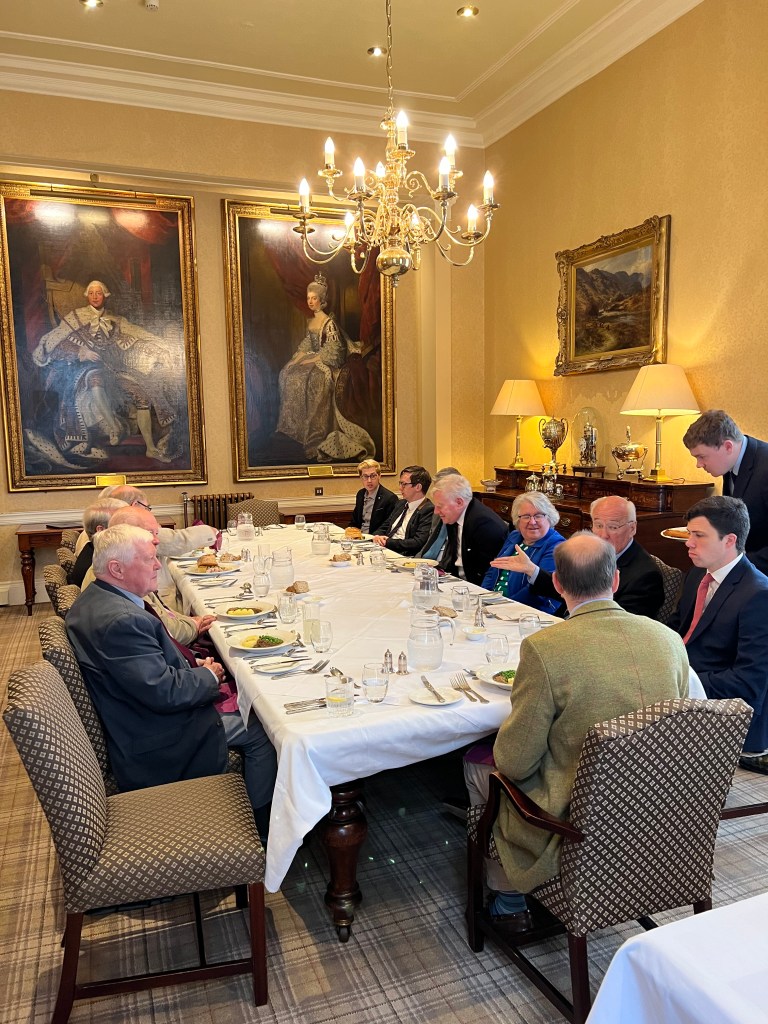
Photo: dr. Jack Abernathy



 Friends of the Scots Brigade